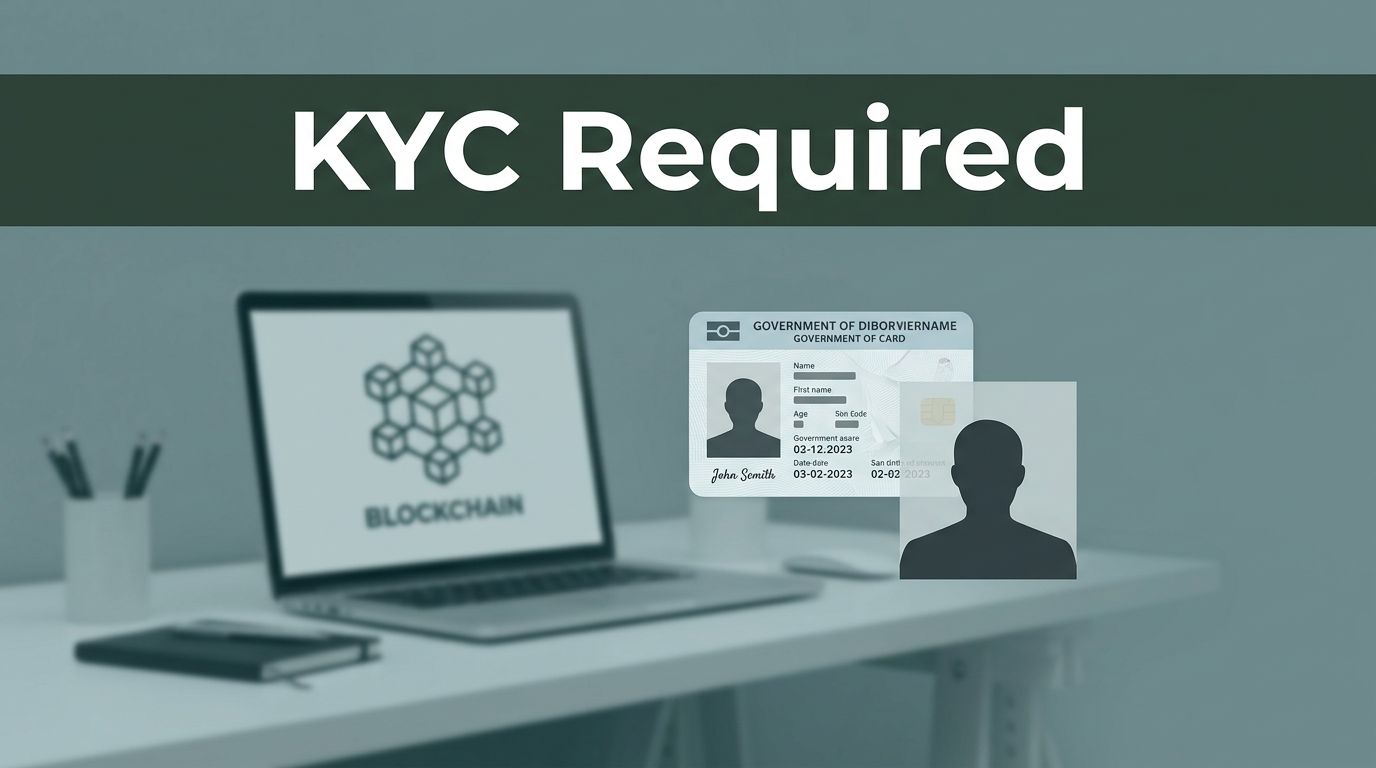
You sit down to trade crypto, you sign up, and then you hit a KYC wall. KYC stands for Know Your Customer, which is the identity verification step most major platforms use before you can deposit, trade, or withdraw. In practice, crypto identity verification means uploading an ID, taking a selfie (sometimes a short video too), and doing a quick match to confirm it’s you.
If you’ve bounced off that screen before, you’re not alone. In March 2026, rising enforcement has pushed more exchanges to tighten checks, especially around high-volume users and large withdrawals. That’s why sites like Coinbase now treat KYC as standard for most customers, not an optional extra.
So what’s the point beyond getting approved faster? First, KYC helps platforms follow laws aimed at stopping money laundering and fraud, including rules tied to AML programs (anti-money laundering) and sanctions checks. Second, it reduces the chance that stolen funds move through someone else’s account, which also protects you when something goes wrong. Third, identity checks support safety and accountability, since exchanges often hold customer funds like financial services do.
Here’s what you gain by understanding how the process works. You can expect what data gets asked for (like address proof in some cases), why a selfie or liveness check may show up, and how platforms reduce risk in the background while you wait. Next, you’ll see exactly how the KYC flow typically works, step by step, so you know what to prepare before you start.
The Legal Rules That Make KYC a Must
Crypto rules keep shifting, but the logic stays steady. Governments treat crypto platforms like banks because the same risks show up: fraud, theft, and cross-border money moves that are hard to trace. As a result, identity checks (KYC) stop being “optional best practice” and become a license requirement.
In this section, you’ll see how MiCA (EU) and FinCEN (US) push day-to-day platform rules, and why global standards from the FATF make those rules travel across borders too.
How MiCA and FinCEN Shape Daily Platform Rules
In the EU, MiCA (Markets in Crypto-Assets) forces crypto firms to follow strict controls as a condition of operating. Under MiCA, crypto companies that provide services are treated like regulated financial providers. That means they must use KYC and customer due diligence, monitor activity for red flags, and report suspicious behavior.
MiCA’s enforcement ramp matters for March 2026 readers because the clock is already running. After July 1, 2026, EU regulators remove transition wiggle room. Firms that still lack the right authorization must stop serving EU customers, or face major penalties. Reported fines can hit at least €5 million or up to 12.5% of yearly turnover (whichever is higher). That’s not theoretical. Stories of enforcement show that “small” KYC and AML gaps can turn into shutdown risk and cash penalties.
Here’s the simple comparison: when a bank opens an account, it asks for ID and watches for suspicious activity. MiCA does the same job for crypto platforms.
In the US, FinCEN treats many crypto businesses as Money Services Businesses (MSBs) under the Bank Secrecy Act framework. Platforms must run an AML program, keep records, and follow reporting rules. They also screen users against sanctions lists, so sanctioned activity can’t slide through unnoticed.
If you want a quick map of how teams plan for these deadlines, see a 2026 regulatory map for exchanges.
FATF’s Travel Rule in Action for Big Transfers
KYC is only half the story. The other half is what happens when crypto crosses platforms, especially for larger transfers. That’s where FATF’s Travel Rule comes in.
In plain terms, the Travel Rule requires VASPs (virtual asset service providers) to share key info about the sender and receiver when value moves between providers above a threshold. Regulators want this because cross-border crime often relies on “handoffs” between exchanges and wallet services. Without shared details, funds can move from one account to another with no audit trail.
Why do platforms push this so hard in 2026? Because the FATF standard shapes national rules. As a result, updates to how VASPs connect the dots show up in real workflows, not just policy PDFs.
A common way to picture it: think of transfers like freight shipments. KYC verifies the shipper and receiver once. The Travel Rule adds shipping labels for big shipments, so investigators can trace what moved and who handled it.
For example, in the US, Travel Rule obligations kick in for transfers of $3,000 or more in crypto, which means the sending platform sends details (like name and wallet or address info where available) to the receiving platform. Then the receiving VASP checks before letting the transfer proceed.
Platforms also face real consequences for getting this wrong. For instance, Paxful received a major penalty tied to BSA compliance failures (including AML control issues), showing regulators will punish gaps that let criminal schemes move through services. See FinCEN’s enforcement coverage against Paxful.
One reassurance worth saying out loud: this isn’t about spying on normal users. It’s about building a paper trail that helps platforms operate legally and helps authorities stop bad actors faster.
Stopping Crime: AML, CFT, and Fraud Protection
Even if your sign-up looks simple, crypto platforms treat it like a security checkpoint. AML, CFT, and fraud controls work together so criminals face friction, not shortcuts. When the checks run well, suspicious funds get stopped early, fake accounts fail before they grow, and law enforcement gets a cleaner trail.
Think of it like a bouncer at a club. KYC is the ID check at the door. AML and CFT are the watchful eyes inside, looking for tells. Fraud prevention is the camera and staff training that spots impersonators and scams before they reach the floor.
In March 2026, this matters more than ever, because attackers keep changing tactics. They try new funding paths, rotate identities, and move fast across services. So platforms increasingly combine watchlists, behavior signals, and identity matching to catch risk patterns that one check alone might miss.
Catching Dirty Money Before It Hits the Blockchain
AML starts with a basic goal: stop illicit funds from entering the crypto flow in the first place. Platforms screen deposits, transfers, and activity patterns against data tied to known criminal behavior. They use databases and risk rules to flag funds that look like they come from fraud, theft, or drug trafficking.
Then they tie those AML signals back to identity. That means your KYC docs help create context, not just permission. If a deposit comes from a flagged source, the platform can review your account tied to your verified identity and transaction history. This is how “dirty money” gets blocked before it blends into the broader market.
A relatable scenario helps. Imagine a hacker steals money from victims and rushes to convert it into crypto. They may open accounts, move funds quickly, then try to withdraw. With AML screening, the exchange can detect patterns like:
- Funds routed through addresses linked to known schemes
- Fast in-and-out movement that matches laundering typologies
- Large transfers that jump risk score after each hop
If the platform confirms risk, it can freeze withdrawals, ask for more proof, or refuse the transaction. Because it happens early, the attacker loses time and may have to abandon the plan.
AI now plays a bigger role too. Many platforms use machine learning to spot “odd” transaction rhythms, then reduce false alerts by learning from past outcomes. For a strong view of how crypto sanctions screening and enforcement connect to real trends, see Chainalysis on crypto sanctions in 2026.

Shielding Crypto from Terror Funding and Scams
CFT focuses on one thing: stopping terror financing and related support networks. Fraud controls focus on people trying to trick you, often through fake profiles. Together, these systems help keep crypto from becoming a funding pipe for harm.
In practice, CFT screening flags accounts and transactions that match suspicious signals. Many platforms look for high-volume sending, unusual routing, and patterns that fit known typologies. They also connect that behavior to identity checks from KYC, so a flagged transfer links to a real person account, not an anonymous mask.
Sanctions checks also sit inside CFT. Platforms screen customers and counterparties against sanctions lists. If you or your connected entities fall into restricted categories, the platform typically blocks or limits services. This matters because sanctioned parties often move through layers of intermediaries, and crypto makes disguise easier.
Fraud protection usually comes from the combination of identity proof and liveness. For example, many platforms require a selfie, plus a check that confirms it is not a reused photo. A strong setup compares facial features, verifies the ID details, and checks for signs of spoofing. So when scammers try to spin up fake accounts, the system stops them before they can request deposits or social-engineer victims.
Here is what it looks like when it works. A fraudster might create multiple accounts, each with slight identity edits, then send small tests to see which withdrawals get approved. AI-based pattern detection can spot that web of activity, especially if the accounts share devices, timing, or repeated recipient behavior. Then the platform can freeze the accounts and block further movement.
Meanwhile, 2026 enforcement trends show why monitoring is rising, not slowing down. Criminals keep using new paths, and platforms respond by upgrading their AML and CFT workflows alongside fraud engines. For an overview of how compliance teams get tripped up, and what gaps still show up in practice, see NOMINIS on AML and CFT mistakes in 2026.

Bottom line: these controls protect the whole ecosystem, not just the platform. When AML, CFT, and fraud checks work together, you get fewer successful scams, fewer stolen-fund withdrawals, and safer trading conditions.
Real-World Impacts and 2026 Trends for Users
In 2026, KYC stops being a formality and starts shaping what you can do on a platform. You feel it most when you try to withdraw, buy with fiat, or switch accounts on short notice. Meanwhile, the rules keep tightening, so the “no-KYC” path comes with sharper limits than most people expect.
What Limits Hit You Without Identity Verification
Skip crypto identity verification and the platform treats you like a riskier customer. So you hit caps, missing features, and slower access, even if your intentions are legit. It can feel like you bought a bus ticket, but the bus only takes cash in exact change.
Here are common real-world limits you may see when you avoid KYC:
- Low withdrawal caps (for example, around $100 per day), plus longer hold times
- No USD buys (or no fiat on-ramp), which blocks easy purchases from your bank
- Reduced trading pairs, often limiting you to a smaller menu of coins
- Fewer transfer options, especially outbound withdrawals to external wallets
- Account “step-ups”, where you get partial access until you submit ID
Some venues still advertise “no KYC,” yet you often end up trading around the edges. Liquidity can be thin, spreads can widen, and customer support can lag when something breaks.
It also changes how platforms respond to policy risk. On big, regulated exchanges, the pattern is clear: they either enforce verification or face shutdowns and fines. If you want the practical comparison, look at guides that test no-KYC claims and list the limits, like Coin Bureau’s no-KYC exchange comparison.

Bottom line: no-KYC is usually a small-trade option, not a full-service alternative. If you’re serious about deposits, larger buys, or faster withdrawals, you will likely need verification sooner than you think.
What’s Changing in Crypto KYC This Year
In 2026, KYC changes feel less like a single new rule and more like a tightening loop. Regulators want stronger checks for money laundering, fraud, and sanctions evasion. At the same time, platforms want the checks to finish faster, so you can use the service without waiting forever.
Three shifts matter for users right now.
First, FATF Recommendation 16 keeps rolling into more practical controls across borders. That pushes more platforms to treat identity checks and risk scoring as part of everyday operations, not background admin. It also reduces the “full anonymity on centrals” experience. You may still see some privacy, but it’s no longer “no questions asked.”
Second, EU MiCA-style compliance pressure keeps spreading, even if you are not in Europe. MiCA signals how firms should run identity checks, due diligence, and suspicious-activity reporting. For some users, that shows up as stricter onboarding or more frequent re-checks.
Third, verification is getting faster because vendors use AI-assisted identity checks. You may still submit an ID and selfie, but the platform can validate liveness, detect tampering, and catch mismatches earlier. If a deepfake or reused photo attempt shows up, the system can stop it faster than older workflows.
Here’s where the trade-offs land. Completing KYC usually means higher limits, fiat access, and smoother withdrawals. However, it also means your identity data sits inside a provider’s compliance workflow. You get safety and access, but you also give up some privacy compared to true self-custody.
That “quick verification” part is worth planning for. To avoid loops and delays, prepare:
- A clear photo or scan of your ID (no glare, no blur)
- A face selfie in good light (no sunglasses, no heavy filters)
- The same name format across documents when possible
- Patience for occasional follow-up checks after big changes
If you want a broader view of what teams focus on for KYC and compliance programs in 2026, see KYC regulatory trends for 2026 and VASP KYC compliance guidance for MiCA and FATF.

Looking ahead, biometric checks could become more common, but not because people love giving data away. Companies want fewer account takeovers and faster fraud stops. So expect more identity steps that feel quick at checkout, even as rules get tighter behind the scenes.
Conclusion
Crypto platforms require identity verification because laws treat exchanges like banks, and banks can’t ignore money laundering, fraud, or sanctions risk. When platforms run KYC, they build the basic user record that lets AML and CFT checks work, and it helps prevent stolen funds from moving through someone else’s account.
It also matters for everyday access. Without KYC, most major platforms limit trading, deposits, withdrawals, and full fiat features. With KYC, you usually get smoother service and safer controls, so you can use the platform with less guesswork.
That leads back to your opening hook, the KYC wall you hit when you sign up. The check might feel like friction, but it’s the price of entry to a more secure crypto experience.
Verified yet? If you’re ready, complete your KYC now, then share this post with a friend who’s still waiting at that same screen.