Imagine you log into your bank app with a quick face scan, no password, and you don’t lose sleep over fraud. That’s where identity verification comes in, today, it checks IDs, selfies, and other signals to confirm you are really you. Now, in 2026, deepfakes and synthetic fraud are rising fast, so simple ID checks often fall short.
As a result, the next wave leans on AI biometrics that can spot fake images, plus phone-based checks that look at how you act, not just what a camera sees. At the same time, digital wallets are starting to share verified info across services, like Europe’s EUDI wallet and US mobile driver’s licenses (mDLs).
But why are these changes happening so quickly, and what problems keep breaking older systems? Let’s start with the pressures that force the shift.
Why Today’s Identity Checks Are Falling Short and Need a Major Upgrade
Identity checks used to feel like a lock and key. Now they feel more like a screen door in a storm. Deepfakes, synthetic IDs, and fake video feeds slip past the basics, while user friction and cross-border rules make it harder to add stronger defenses.
At the same time, fraud is shifting from “try once” to “test and tune.” Attackers don’t just break systems, they learn what you accept, then they find the fastest path through.
Deepfakes and Smart Fakes Outpacing Basic Scans
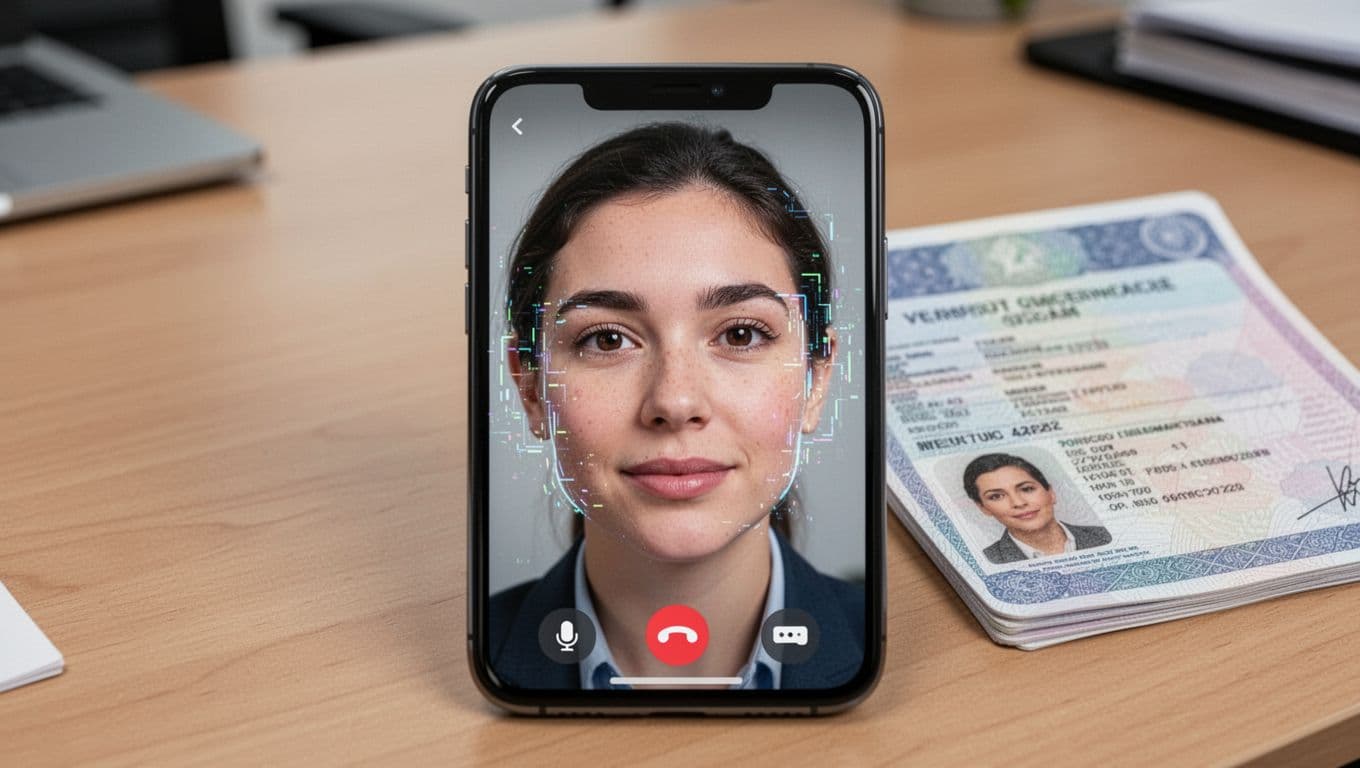
Basic identity checks often hinge on two things: document look-alikes and selfie matches. However, AI can now manufacture both, and it does so at scale. In the US, identity fraud losses hit $47 billion in 2024, and deepfakes are a top worry among fraud experts. Even worse, humans spot high-quality deepfakes under 25% of the time.
Here’s what’s changed. Deepfakes no longer just replace a face in a still photo. Instead, attackers feed fake video to the verification app right as the “live” capture happens. Think of it like swapping the person in front of the camera while the system watches the screen. Many setups rely on liveness checks that look for motion cues or simple video artifacts. Those cues can be bypassed when the attacker controls the feed.
Synthetic identity fraud adds another layer. Fraudsters don’t always steal one full identity. They build new “people” by combining real data with AI-generated details, then they pass checks because the identity looks consistent over time. That’s why synthetic fraud can grow even when you block the obvious fakes.
To see the trend in plain terms, take a look at reporting on how synthetic identity fraud is becoming a major industry blind spot in the deepfake era: Synthetic identity fraud and deepfakes.
Liveness checks are improving, but they’re not a single finish line anymore. They need to evolve into layered signals that include context, device behavior, and ongoing risk checks.
Balancing User Speed with Ironclad Security
When you add stronger verification, customers feel it. That’s the real tug-of-war. Biometrics can raise security, but they also add steps, extra prompts, and more chances to fail. A process that feels fine in one country can break in another due to lighting, network speed, phone quality, and even accent patterns in voice checks.
Meanwhile, rules keep changing. Businesses also face different privacy and biometrics policies across US states and other countries. Add third-party vendors and “helpful” shadow IT apps, and you get more variance, not less. Some teams end up with unmanaged AI tools making decisions without full oversight.
So the goal shifts to friction that only appears when you need it. In practice, that means your flow should adapt in real time based on risk, not always demand the same heavy checks.
Consider a tuned approach like this:
- Start light, escalate fast: begin with low-friction checks, then request stronger steps only when risk rises.
- Use device and session signals: combine biometrics with context like network behavior and app integrity.
- Design for accessibility: support many lighting conditions, camera types, and user needs.
- Plan for human reality: some users will retry, some will fail due to glare, and some will be on older devices.
- Keep governance tight: ensure vendors and internal tools follow the same risk rules and audit trails.
If you want a helpful view of the operational pain across borders, see Global identity verification challenges. The common thread is coverage gaps and cost pressure, both of which push teams toward weaker checks unless they automate better.
In short, the next upgrade isn’t just “stronger biometrics.” It’s identity-first security with smarter routing so you stay secure without making every login feel like a DMV line.
Cutting-Edge Tech Set to Redefine How We Verify Identities
Identity checks in 2026 shift from “prove it once” to “prove it correctly, every time.” The tools get more private too, so your phone can prove you are you without handing raw data to a server.
Think of it like a magic trick. You show you know the answer, but you never reveal the steps.
Biometrics on Your Phone: Fake-Proof and Private
Your phone becomes the verification room. Instead of sending your selfie to a distant system, on-device biometrics can run the match and liveness checks locally, then pass only a yes-or-no result (or a locked proof) to the app.
Selfie liveness is a big deal here. Modern flows use active and passive signals, such as natural head motion, blinking patterns, and depth cues. So a printed photo, a static mask, or a pre-recorded video has a harder time passing. If the user can pass liveness, the system treats the session as more trustworthy.
Behavioral biometrics also adds context. It looks at how you hold your device, how you move during the capture, and how your login actions fit normal patterns. Even small differences, like unusual timing or odd hand motion, can push risk up or down.
Privacy improves, because many systems use zero-knowledge proofs. In simple terms, they can prove facts without exposing the raw data. For example, you can prove you are over a certain age without showing your birthdate. Another example: you can prove a selfie matched your stored template, without sending the selfie itself.
One clear example of this privacy-first direction is covered in Zero-Knowledge Proof Humanity: Privacy-Preserving. – Didit.
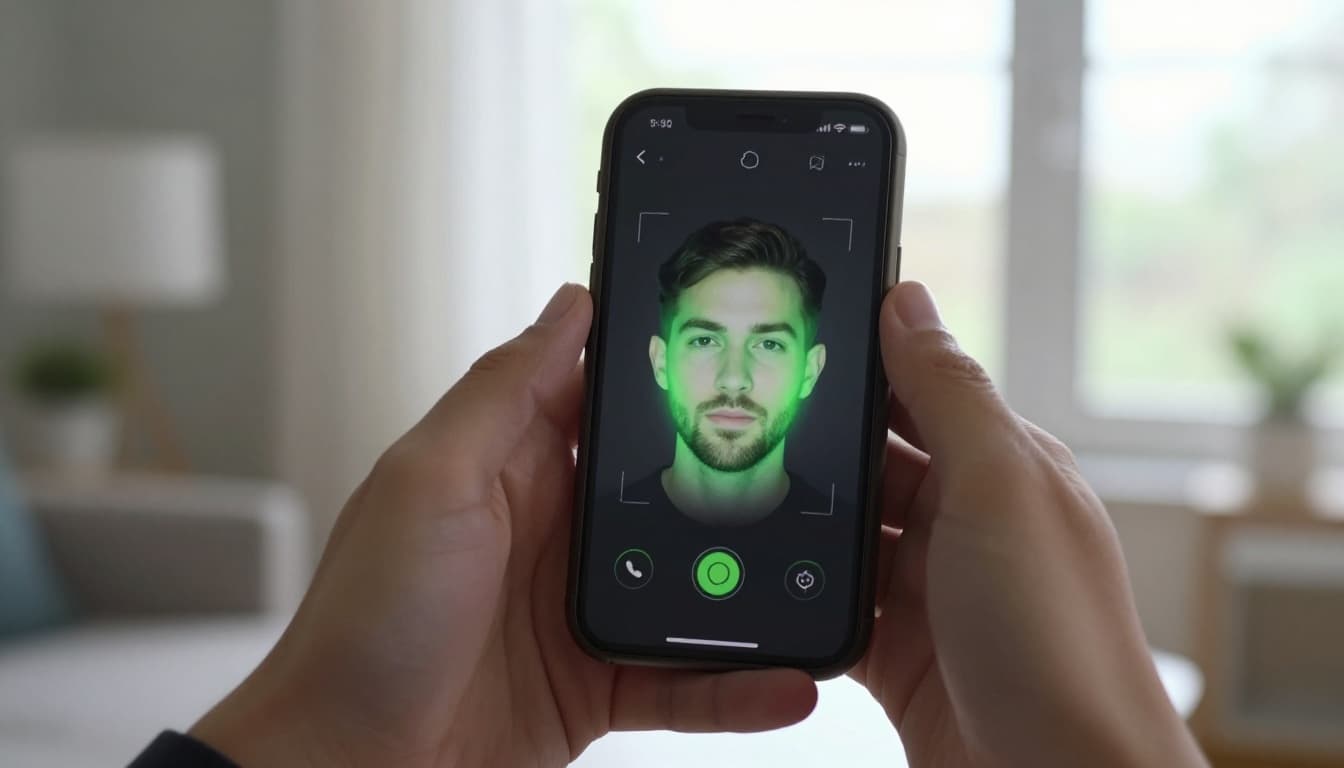
The practical benefit for you is simple: fewer hacks, fewer breaches, and less repeat work when you log in again.
AI as Your Fraud-Detecting Sidekick
AI becomes the second set of eyes during identity checks. It spots fakes across the full flow, not just at the selfie moment. For documents, it can read text with OCR, compare typography and layout, and look for signs of tampering or AI-generated artifacts.
For selfies, it helps in two ways. First, it strengthens liveness decisions by analyzing frame patterns, capture quality, and other signals. Second, it watches for mismatch clues, such as lighting inconsistencies or unnatural motion that humans often miss.
Then it moves beyond images. During logins and payments, it checks your behavior signals like typing rhythm, swipe patterns, and how quickly you complete steps. That matters because fraud often comes from stolen sessions and scripted attempts, not just from fake documents.
When biometrics and AI work together, you get real-time risk calls. Low-risk attempts sail through. Higher-risk attempts trigger extra steps, like a stronger proof, a different capture mode, or a short wait.
This layered approach also helps against synthetic identity attacks, where fraudsters mix real and fake data. For example, AI can flag inconsistencies that show the identity was stitched together.
A useful overview of how synthetic fraud is changing in 2026 is in 7 Ways Synthetic Identity Fraud Is Changing in 2026.
In everyday terms, AI acts like a fraud radar. You still get a fast login, but the system watches for warning signs.
Decentralized Wallets: Control Your Identity Like Never Before
Decentralized identity wallets put you back in control. Instead of every service collecting your raw identity data, your wallet can store verifiable credentials and share proofs when you need them.
Here’s the key idea: you share claims, not your whole life story. If a site needs “over 18,” your wallet can present a proof for that claim. If it needs “has a valid driver’s license,” it can share proof tied to that credential, without exposing extra details.
This approach also helps when rules change. Your wallet can revoke or update credentials, so old proofs don’t stay valid forever. That reduces the risk of one breach turning into many account takeovers.
In Europe, the EU Digital Identity Wallet (EUDI Wallet) aims to make government-backed digital IDs easier to use across services. You can see more detail on the push in The European Digital Identity Framework: introducing the new EU Digital Identity Wallet.
In the UK, mobile driving license rollouts also point toward this wallet-style verification, where identity and age proofs become easier to present in apps.
Even in the US, mobile license support is growing across states, using phone-based capture and secure checks. Over time, that trend moves verification from “upload documents” toward “present wallet proofs.”
The future benefit is clear for you: less repeated data entry, less exposure of personal data, and more control over what each app can actually verify.
Expert Predictions: What the Identity World Looks Like by 2030
By 2030, identity verification will feel less like paperwork and more like everyday convenience. Most experts agree on one big shift: verification will move from a one-time check to a continuous trust signal that runs quietly in the background. Instead of asking, “Are you you?” apps will mainly ask, “Is this request coming from the right person, right now?”
You can picture it like a well-run hotel. You still get checked in at the front desk, but every door you use later keeps confirming you belong there. That means fewer repeated logins, fewer “upload your ID again” moments, and fewer fraud wins.
Wallets everywhere, with reuse that reduces repeated ID checks
A clear theme in 2026 and 2030 predictions is reusable digital identities. Rather than storing your ID details in every app, a wallet will hold verified credentials and share only what a service needs. That lowers data exposure and reduces the friction of onboarding.
In practical terms, you will likely see more “proof sharing” workflows. For example, you might prove you are above a certain age without handing over your full date of birth. Or you may show a valid status credential for a service that requires eligibility.
Reports also point to a wider adoption path for wallet-style identity systems. Some coverage of 2030 direction frames it as an AI-native setup that improves user experience while managing risk behind the scenes, like the Didit view in The Future of Identity Verification in 2030: An AI-Native. – Didit. The core promise sounds simple: do the hard work once, then reuse it safely.
Non-human identities and continuous verification become normal
Here is where 2030 gets interesting. Identity systems will not only verify people. They will also manage non-human IDs for bots, apps, and automated agents acting on your behalf. In other words, companies will treat AI-driven requests as entities that need trust rules too.
At the same time, verification will keep happening after signup. Instead of a single check during onboarding, systems will refresh trust during logins, payments, and sensitive actions. That approach helps because many modern attacks aim at the session, not the initial account creation.
Deepfake defense also becomes a must-have metric. AI will assess liveness and presentation attacks, then adjust the flow when risk rises. Meanwhile, regulators will continue pushing for stronger controls, and many teams will treat compliance as an advantage, not a cost. For a sense of how 2026 predictions frame these pressures, see Digital Identity Trends 2026: AI Fraud, Compliance, and Orchestration – IDnext. The takeaway is optimistic: better verification can be smoother for users, as long as risk scoring and rules stay current.
Meet the Trailblazers Building Tomorrow’s Verification Tools
In 2026, identity verification won’t just “check” you. It will judge risk, adapt in real time, and keep working after signup. So when you evaluate vendors, don’t ask only, “Can you verify an ID?” Ask a better question: How does the tool keep attackers from passing on the wrong day, with the wrong device, or in the wrong context?
Jumio: ID selfies, risk signals, and reusable identity for returning users
Jumio stands out when you want a practical blend of document capture, selfie verification, and ongoing risk scoring. Their tools focus on the full flow, not just the moment someone submits a selfie. That matters because attackers now target the whole process.
You’ll often see teams use Jumio for ID selfie verification plus fraud signals during onboarding, then extend those checks to later steps. For example, Jumio’s risk signals concept centers on decision workflows that start with background signals and escalate when risk rises. In other words, it’s not one fixed step. It’s more like a thermostat that only turns on heat when the room gets cold.
For returning users, Jumio also pushes toward less repeated verification. Their selfie.DONE™ approach aims to recognize and re-verify trusted users with less friction, which helps when you want security without constant re-capture. That’s a big deal for conversion because repeated selfies often feel like a tax.
If you want an example of how Jumio frames these ideas, see Jumio’s risk signals. For broader context on how they describe identity in 2026, Jumio Live: Digital Identity in 2026.
Proof: deepfake-resistant verification that treats trust like a persistent record
Proof focuses on the trust trail. Instead of treating identity checks as a one-time event, it pushes toward persistent identity and stronger deepfake defense. The key shift here is simple: if an attacker can pass once, they will try again. So systems must keep verifying that the person behind the session stays the same.
Proof’s messaging often points to deepfake detection as part of a wider verification approach, including how identity gets reused across processes. That helps teams reduce the “rescan loop,” while still keeping enough proof to stop fraudsters who rely on recycled access.
When you think about fit, ask yourself two things. First, do you need identity checks to stay strong across multiple steps (not just initial onboarding)? Second, do you need the system to handle higher fraud pressure from synthetic media and AI-made impersonations?
If you want a grounded look at how Proof connects deepfake detection and persistent identity, read Proof’s deepfake detection updates.
Trulioo and GBG: compliance-first verification with behavioral monitoring
Compliance matters in 2026, but not as a checkbox. Trulioo’s angle emphasizes how legacy verification struggles against AI-enabled fraud at scale. Their focus lands on the move from static, one-time checks toward adaptive defense that evolves with the threat.
Meanwhile, GBG leans into behavioral signals as an extra line of proof. Behavioral biometrics can add value because it’s harder to fake than a single image. It observes how people interact, not just what they look like. For instance, if someone’s typing cadence, device behavior, or interaction patterns drift far from normal, risk can rise quickly.
If you’re building for real adoption, these two approaches work well together: Trulioo helps with compliance and data-driven identity signals, while GBG adds a behavioral layer that strengthens decisions during login and account actions.
For Trulioo’s take on why legacy systems fall short, see Trulioo on AI fraud breaking legacy verification. For background on behavioral biometrics, use GBG’s biometric authentication guide.
How to pick the right tool without getting sold on buzzwords
It helps to map each vendor to the problem you actually have. Here’s a quick way to choose, based on what teams typically optimize for in 2026.
| If your biggest pain is… | Look for this vendor strength | What it usually means for your flow |
|---|---|---|
| Fake IDs and selfie fraud at onboarding | Jumio (ID selfies + risk signals) | More escalation only when needed, less repeat verification for trusted users |
| Deepfake-driven impersonation over time | Proof (persistent trust) | Proof stays relevant across steps, not just “pass once” checks |
| Compliance plus adaptive, modern fraud signals | Trulioo | Data and rules update for AI-enabled fraud patterns |
| Fraud that hides in behavior, not just faces | GBG (behavioral monitoring) | Extra risk signals tied to how someone uses a device and app |
When you evaluate, don’t ask for a demo slide. Ask for answers to these practical items:
- Risk routing: What happens when risk rises, and how fast?
- Reuse: Can trusted users avoid full resubmission?
- Layering: Which signals combine (biometrics, docs, device, behavior)?
- Governance: Can you audit decisions and tune rules safely?
If wallets are part of your roadmap, also keep wallet verification reality in mind. Daon calls out that many teams struggle to fully verify wallets at scale, so make sure your plan includes verification coverage, not just wallet support. Their perspective is detailed in Daon on verifying digital wallets.
Conclusion: Trust Gets Built Into Identity, Not Forced Into It
Identity verification systems are heading toward continuous trust. Because fraud keeps changing, the best platforms combine AI biometrics, liveness checks, and behavior signals, instead of relying on one simple scan.
At the same time, digital wallets and mobile IDs are shifting control to you. As more checks run on your phone and share only the proof needed, verification can stay safer while also feeling smoother.
If you run an app, take a practical next step now. Review your login and onboarding flows, look for features that add on-device checks and smarter risk routing, and validate providers such as Jumio against your threat model (including deepfakes and synthetic identity risk). Also, follow the rules in your region so your process stays aligned as requirements change.
What would change for you if identity trust worked in the background, and you only did extra steps when risk truly rises?