Signing up for a new phone plan should feel like a quick tap, not a long trip to an office. Yet, telecoms have to verify who you are before they activate service. That’s where KYC comes in, short for Know Your Customer.
In simple terms, telecom KYC systems help companies confirm identities, reduce fraud, and meet legal rules. You’ll see it when you set up mobile plans, activate eSIMs, or use telecom-linked payments.
Next, you’ll see how the process usually works in practice, what’s changing in 2026, and why the benefits often outweigh the friction.
The Step-by-Step Process Telecoms Follow for KYC Checks
Telecom KYC isn’t one single task. It’s a chain of checks that covers the moment you join and the time after you join.
Below is a common flow many operators use, adapted to their own risk levels and product types.
- Onboarding and capture
You submit an ID (scan or manual fields). Then the app may run a “live” check, like liveness or facial match. - Automated verification and screening
Systems pull data from the ID and run checks like watchlists and risk signals. Most teams rely on APIs to do this quickly. - Decisioning
The operator decides whether to approve, ask for more info, or block the request. Risk rules drive this step. - Service activation
After approval, the telecom activates the line, remote provisioning (like eSIM), or payment access. - Ongoing monitoring
Telecoms keep watching for changes (like address updates) and new risk signals. This is often called perpetual KYC, or pKYC. - Investigation and escalation
If something looks off, the case goes to a human reviewer. Then the operator logs the outcome for compliance.
In the telecom world, that whole flow also supports fraud prevention tied to identity proofing. For example, identity verification vendors often describe telecom-specific fraud risks and how verification reduces them, including fake enrollments and identity abuse (see Identity Verification in Telecom: Prevent Telecom Fraud).
Quick Onboarding with Digital ID Scans and Biometrics
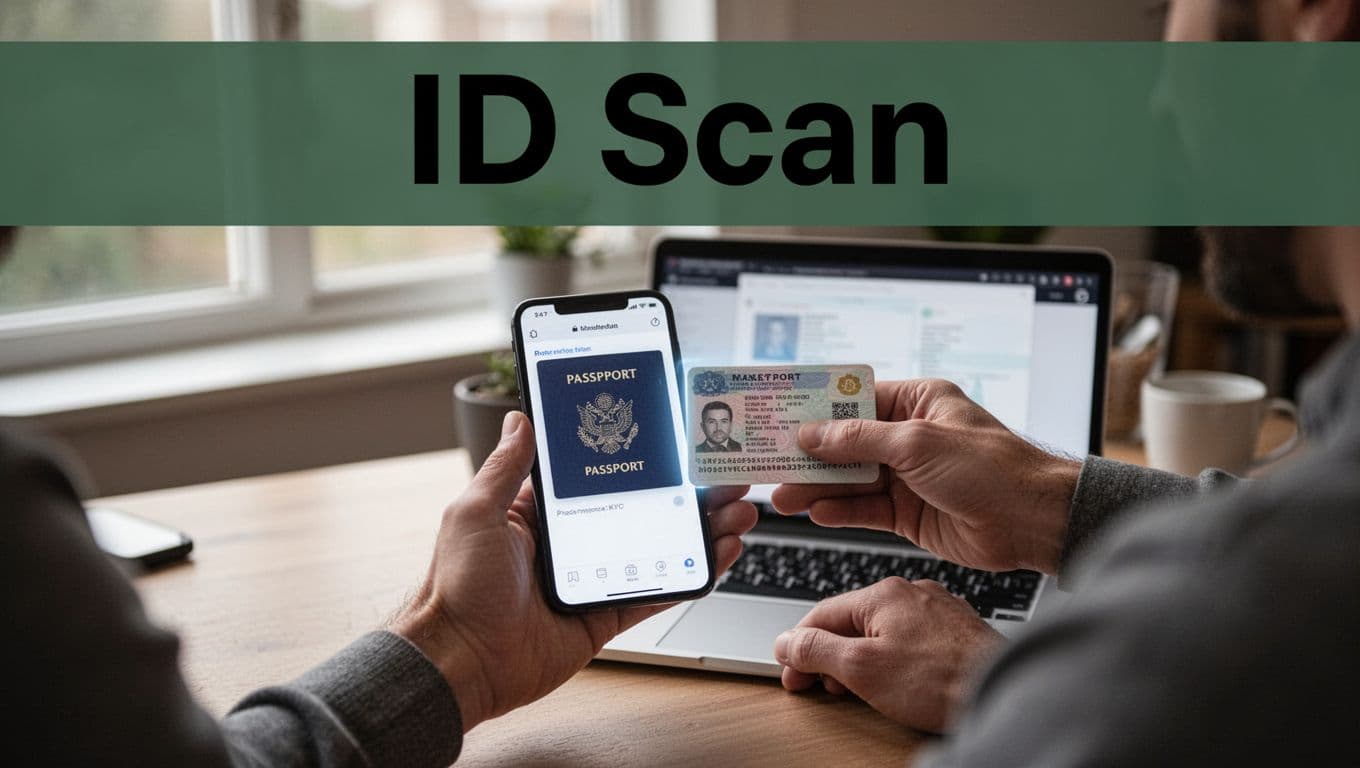
Most telecom signups today start online or at a store kiosk. You scan a passport, driver’s license, or national ID. Then you take a short selfie or follow a liveness prompt.
This can feel faster for users, because you don’t need to mail documents. Instead, the system checks for things like blur, tampering hints, and whether the face in your selfie matches the ID photo.
For compliance, telecoms often align their approach with EU rules for digital identity and privacy. If you operate in the EU, operators also plan for eIDAS and GDPR expectations around lawful processing and data minimization.
Some companies also offer signups through trusted digital identity apps in Europe. For instance, customers may use services like itsme to prove identity, then use that proof for eSIM activation or secure logins. When that works well, the “setup” step becomes closer to a guided authentication flow.
AI-Powered Automation to Spot Risks Right Away
Once your ID is scanned, the telecom doesn’t want a manual review for every case. So it uses automation to speed up approval while catching obvious risk patterns.
Common automation steps include:
- Document authenticity checks (flags for mismatched formats or signs of tampering)
- Identity matching (selfie to ID photo checks, plus basic data consistency)
- Sanctions and watchlist screening (matching names and other data to risk lists)
- Fraud pattern checks (for example, same device, same payment method, or unusual timing)
Many providers also integrate with external data sources using APIs. That way, verification and screening happen in seconds, not days.
Identity checks can also include biometrics and other signals. Some telecom operations teams describe a biometric approach built into KYC workflows, especially when they need strong verification for fraud-heavy customer journeys (see KYC for telecom operations: a biometric approach).
Ongoing Monitoring Keeps Identities Fresh and Secure
A one-time check doesn’t cover what happens later. Address changes, name changes, device switching, and new fraud tactics can all affect risk.
So telecoms use pKYC to keep identity records current. Instead of redoing full checks on every event, systems trigger updates based on risk signals. For example, a change in address might require refreshed verification. A high-risk request like a replacement SIM might trigger deeper checks.
This “always-on” idea matters because telecom fraud can scale quickly. SIM swap attempts, account takeovers, and fraud linked to messaging scams often evolve fast.
Cybersecurity rules also push telecoms toward stronger controls. Even when a rule targets cybersecurity, identity proofing helps reduce incidents caused by account fraud and weak onboarding. This is one reason operators increasingly link KYC with security monitoring.
Secure Activation for eSIMs and Mobile Payments
eSIM activation is a high-friction point for fraud. Because provisioning can happen remotely, criminals may try to hijack identity or trick systems into activating service on their behalf.
That’s why telecoms usually treat eSIM activation like a protected workflow:
- Only verified users can request activation
- Risk scoring decides if extra steps are needed
- Device and account behavior can be checked before allowing activation
- Failed attempts can be throttled or sent to manual review
If the telecom also supports payments, KYC connects to payment risk controls. That includes checks tied to the customer, the device, and the account context.
This is also why telecoms often pair KYC with broader compliance tooling. Some vendors describe telecom KYC as a way to balance customer acquisition with security and rule requirements (see KYC Solutions For Telecom Companies: Boosting Efficiency).
Key Trends and Regulations Driving KYC in Telecom Today
KYC keeps changing because fraud tactics keep changing. In 2026, telecom operators face two pressures at once: move faster for customers and prove compliance to regulators.
Hot Trends Like AI and Perpetual KYC Taking Over
In many markets, the biggest shift is moving from “check once” to “check as needed.” That’s where pKYC grows.
Operators increasingly use event triggers, such as:
- address or profile changes
- new device onboarding
- repeated verification failures
- unusual request patterns
- risk spikes tied to external intelligence
At the same time, AI helps telecoms make faster decisions. AI can assist with document quality checks and fraud detection patterns. It also supports straight-through processing, meaning fewer cases need manual review when the risk is clearly low.
For telecoms, another practical trend is data sharing through well-designed integrations. In short: KYC becomes faster when verification tools can exchange signals through secure APIs.
You can also see KYC trends popping up in anti-spam programs. For example, regulators have pushed telecoms to act on suspected spam and share information between operators quickly. In India, a 2026 direction requires operators to share suspected spam information between networks within tight time windows (see TRAI Spam Rules – Telcos Must Share KYC in 2 Hours). Even though that rule focuses on spam, it relies on identity-linked customer checks and fast risk handling.
Must-Follow Rules from GDPR to NIS2
Telecom KYC is not only about fraud. It’s also about law.
In the EU, privacy and digital identity rules shape how telecoms collect and use data:
- GDPR: sets rules for lawful data processing, purpose limitation, and user rights.
- eIDAS (and eIDAS 2.0 planning): drives how digital identity solutions work across borders.
- NIS2: pushes higher cybersecurity standards, which indirectly raises expectations for controls that protect accounts and systems.
- EECC (network and service rules): supports broader telecom safety goals.
Also, 2026 prep work matters for new AML frameworks. Recent EU AML developments focus more on ongoing monitoring, risk-based updates, and stronger oversight. For example, the EU AMLR includes requirements that support perpetual updates, and the AMLA sets up a stronger coordinating authority.
If you want a telecom-focused summary of why KYC matters for compliance and trust, this overview-style explanation can help frame the “why” (see The Importance of the KYC Process in Telecom).
Real Benefits Telecoms and Customers Gain from Strong KYC
For customers, KYC can feel annoying. But strong KYC usually reduces problems you can’t always see until they happen.
Here are the big wins.
- Fewer fraud incidents
When identity checks improve, telecoms reduce identity theft and account takeovers. That helps prevent scams tied to fake line activations. - Faster approvals for low-risk users
Automation and better decisioning mean low-risk customers get through quickly. Only higher-risk cases face deeper review. - Safer digital services
eSIM activation and payment access become less risky when KYC ties into provisioning and access controls. - Easier compliance for telecoms
Compliance isn’t only paperwork. It also supports consistent handling of cases, audits, and evidence trails. - More trust with better controls
When privacy rules and data minimization are built in, customers often get clearer boundaries on how data is used.
The key point is this: KYC works like a seatbelt. You don’t notice it every day. But it helps during the moments that matter most.
Common Hurdles Telecoms Face with KYC and How They Tackle Them
KYC is not a plug-and-play feature. Telecoms deal with real tradeoffs.
One common hurdle is system integration. Many operators have older customer databases and legacy activation platforms. New digital ID checks must connect without breaking service workflows. That means mapping data, handling edge cases, and building secure API connections.
Next is changing rules. Telecom KYC programs must evolve as privacy expectations and risk models shift. Operators also face different rules across regions and product lines. For example, KYC for consumer lines may look different from KYC for business accounts (and KYB for companies).
Another issue is AI fairness and accuracy. If models are biased or data quality is weak, the system can reject valid customers or let risky ones through. Telecoms respond with better training data, human review for edge cases, and ongoing monitoring of false rejection and approval rates.
Finally, cost and scaling is real. Ongoing checks mean more data flows, more vendor spend, and more case handling. The best teams reduce cost by reserving manual reviews for high-risk cases and using automation for low-risk decisions.
These hurdles also hint at what’s coming next, because the future favors automation plus good governance.
The Future of KYC in Telecom: Always-On and Integrated Everywhere
Looking ahead to late 2026 and beyond, telecom KYC moves toward two ideas: always-on monitoring and tighter integration across systems.
First, more workflows will trigger new checks based on events, not fixed schedules. That reduces unnecessary friction. It also catches changes sooner, when fraud attempts are most vulnerable to disruption.
Second, KYC will embed into more parts of telecom operations. That includes:
- account logins and device onboarding
- eSIM provisioning flows
- customer support identity checks
- payment-linked access and money movement protection
- fraud operations tools and risk case systems
Third, regulators keep pushing for stronger oversight and clearer accountability. In the EU, ongoing AML changes and digital identity requirements will shape what “good” looks like. Operators that prepare early tend to reduce rework later.
The upside is clear. With better automation and better controls, telecoms can onboard more customers with less fraud risk. And customers get fewer service interruptions caused by avoidable identity issues.
Conclusion
When you ask, “How do telecom companies use KYC systems?” the real answer is about more than verification. It’s about a full workflow, from ID scan to risk screening, then ongoing monitoring.
In 2026, the biggest shift is toward perpetual KYC and AI-assisted decisions. That helps telecoms act fast without sacrificing privacy.
If you’ve had a smooth (or frustrating) KYC signup, share what happened. Then check your telecom’s activation experience and see whether it uses fast digital checks, clear privacy controls, and smart escalation for higher-risk cases.